

TEFL/Applied Linguistics
Jordan
Number of recipients
In addition to being a prestigious academic exchange program, the Fulbright Program is designed to expand and strengthen relationships between the people of the United States and citizens of other nations and to promote international understanding and cooperation. To support this mission, Fulbright Scholars may be asked to give public talks, mentor students, and otherwise engage with the host community, in addition to their primary activities.
The 2025-2026 Fulbright U.S. Scholar Program in Jordan is currently suspended. The 2026-2027 candidate selection process and 2027-2028 application cycle are proceeding as usual. The Fulbright Program continues to monitor the regional conditions in close coordination with the U.S. Department of State. Any changes to the status of a program will be updated on our website.
Host institutions welcome scholar activities related to English language teaching (or training), as a primary assignment. The award is intended for direct TEFL teaching activities and may include (but is not limited to):
- Teach undergraduate and graduate courses (two to three courses per semester), with an emphasis on English language teacher training;
- Conduct training programs for senior English students, junior level English teachers and faculty;
- Conduct workshops/seminars to build assessment capacity and/or research capacity to teacher trainees;
- Assist in the development of programs and curricula, resource material development, testing and evaluation, and program design and implementation.
Final activities and courses determined in consultation with the host institution.
Any appropriate Jordanian university or Jordanian institution may serve as a host. The Commission provides a list of contacts and suggested host institutions on its website, but scholars are required to secure their affiliation by the time of application. All host institution affiliations will be confirmed by the Fulbright Commission in Jordan.
Three to nine months
The academic year in Jordan runs from September through June. Grants may begin in mid-September 2027 or in January 2028 (for programs shorter than six months), but all grants must be completed by June 30, 2028. To facilitate university placements, a September start date is recommended.
Grantees beginning in September are expected to arrive in Jordan for an in-country orientation scheduled for mid-September 2027. Grantees beginning in January will receive an orientation upon arrival in January.
Please note that program start dates are limited to September and January only.
Flex Grants may begin in any month between September and May.
The Flex Award is designed for scholars who require multiple visits to the host country. This option allows grants to be conducted over two or three short segments. Applicants must select Flex in the application form, and clearly describe their plans for Flex in their project statement, including a project timeline. Flex grantees may be asked to give public talks, mentor students, and otherwise engage with the host-country academic community.
Only applications in the following disciplines will be considered: TEFL, Education, Applied Linguistics, and English for Special Purposes (ESP), Translation Studies, or Intercultural Communications. Specializations will vary, but in general, scholars with one or more of the following specializations will be preferred:
Teaching English as a Foreign Language:
- English teaching pedagogies and techniques
- TEFL curriculum development and design
- English for special purposes or English for academic purposes, such as course design
- Computer-assisted language learning or other technology-enhanced teaching and learning techniques
- Teaching methods of English writing, listening/speaking, or reading
- Methods of assessment and evaluation of English language learners
- Structure of English
- History of English
- American, British, or international English literature in the ESL classroom
Applied Linguistics:
- Second language acquisition
- Language analysis (theoretical and/or practical grammar, phonology, morphology, syntax, lexis)
- Sociolinguistics
- Psycholinguistics
- Discourse and/or conversation analysis
Other:
- Translation studies
- Intercultural or cross-cultural communication
- Bilingualism
During their grant period, Fulbright U.S. Scholars in the Middle East and North Africa region may apply for a short-term regional travel grant (three to fourteen days) for participation in a variety of activities including faculty and student lectures, graduate or faculty seminars, curriculum development, public lectures, panel presentations, needs assessment, conferences, or some combination thereof.
All applicants must meet the Program eligibility requirements (click to review the requirements).
A letter of invitation is required for a complete application. Host institution affiliations will be confirmed by the Fulbright Commission in Jordan.
All teaching will be conducted in English unless otherwise specified by the host institution. For teaching grants, while class material and content are in English, a basic level of Arabic can support classroom communication and student engagement.
A Ph.D. in TEFL/TESOL, second language acquisition, applied linguistics or a closely related field is required for this award. A minimum three years of college-level teaching and teacher training experience is preferred; ESL teaching alone is insufficient as a qualification. Expertise in curriculum and materials development is highly desirable. Scholars of all academic ranks with appropriate experience (including community college and adjunct faculty) are welcome to apply. Scholars affiliated with Jordanian universities must provide a scanned copy of their Ph.D. diploma. In some instances, grantees must provide the host institution with scanned copies of the Bachelor's and Masters diplomas.
- Teaching or Teaching/Research grants: $2,750-$3,000 per month, depending on academic rank.
- Monthly Maintenance Allowance (MMA) for all grants: $2,000 per month.
Travel and Arrival Costs: The Commission will directly cover and arrange grantees’ one-way airfare to Amman, three to four nights' hotel stay upon arrival, and transportation from the airport to the hotel. If the grantee is accompanied by dependents, the Commission will also book the ticket for one additional dependent and arrange airport transport and hotel stay for the additional dependents (if applicable).
Relocation Allowance: Grantees will receive two payments totalling between $2,250 and $4,750, depending on whether they are accompanied by dependents or not and on the program duration (less or more than six months). These payments support relocation from the United States to Jordan and within Jordan. Eligible expenses include excess baggage fees, visa fees, transit costs, local transportation in the U.S., the return ticket from Jordan to the U.S. at the end of the grant, and other costs related to establishing a domicile in Jordan. An amount of $1,000 from the settling-in allowance should be set aside by the U.S. scholars with grants of 6+ months to cover the costs of health clearance tests, residency and/or work permit fees.
- The Monthly Maintenance Allowance (MMA) may increase up to $700 per month, based on the number of dependents.
- We provide a one-time dependent travel allowance of $2,500.
- Grantees will receive school tuition assistance for up to two accompanying dependent children in grades 1 - 12. To qualify for this tuition assistance, the dependents must accompany the scholar for the full grant duration. Awards of five to six months include a one-time payment of $2,500 per qualifying dependent child, and awards of six to nine months include a one-time payment of $5,000 per qualifying dependent child.
Dependents must accompany the grantee for at least 80% of the period abroad and a minimum of one semester in order to qualify for additional dependent benefits. Dependent benefits are not provided to Flex grantees.
Apartment monthly rents, including utilities, generally cost between $1,000-$1,500.
Transportation: Around $175 per month but will vary depending on the mean of transportation used.
Food and grocery shopping: Will vary; a single scholar will pay less than one with a family.
To cover miscellaneous local transportation costs (taxis, Uber, rapid bus transit, etc.) the grantee will receive a monthly allowance of $250 per month or its equivalent in Jordanian Dinars.
Final grant amounts will be determined prior to the start of the academic year and are subject to the availability of funds. The United States Department of State and the Fulbright Commission in the host country reserve the right to alter, without notice, participating countries, number of awards and allowances.
Jordan
Living in Jordan can be a very rewarding experience on many different levels. Jordanian culture has Arabic and Islamic elements with substantial Western influence. Its population is diverse because of its strategic location. Jordanians are known to be gracious and friendly hosts and Jordanian cuisine is delicious, fresh, and varied. There are many attractive natural and historic sites and numerous places to explore. The climate is hot and dry in the summer and cooler and wetter in the winter.
The academic year for both universities and schools in Jordan is from September to May/June and is usually divided into two semesters. All schools in Jordan, including public, private, and international schools follow a school calendar set by the Ministry of Education and Ministry of Higher Education and Scientific Research.
U.S. Fulbright grantees to Jordan are highly encouraged to actively expand their professional and academic expertise, engage in meaningful research collaborations with international scholars, build lasting professional and personal networks, and contribute to fostering strong connections between their home and host institutions. Fulbrighters to Jordan should fulfil their agreed terms and conditions of award and carry out the academic program outlined in their original applications.
The Commission provides directories and resources to support the grantees’ efforts towards fulfilling these requirements. The Commission also organizes a volunteering-specific session during grantees' orientation in Jordan. Grantees are also welcome to reach out to program staff for additional guidance and support as needed.
As part of the Fulbright Program in Jordan, grantees are expected to contribute to broadening its impact through volunteering for a minimum of 30 hours over the course of their grant with a CSO/NGO, educational institution, or community initiative. They are also expected to organize and conduct at least three knowledge- and Fulbright-experience-sharing initiatives, such as holding a workshop, delivering a public lecture, or publishing content (articles, blogs, social media posts/reels, etc.), to convey their knowledge with the broader public. Scholars are encouraged to document and share their experiences, supporting the program’s mission of cultural exchange, mutual understanding, and community engagement.
The Binational Fulbright Commission in Jordan, officially known as the Jordanian-American Commission for Educational Exchange, is the main point of contact for all Fulbright grantees. Our offices are located in a villa in the quiet residential district of Abdoun in Amman. The Commission serves Jordanian and American students, scholars and professionals, and provides a support network for all Fulbrighters in Jordan.
The Fulbright staff is committed to ensuring that each grantee becomes a member of our Fulbright family and feels that a home-away-from-home is ever present from the day of their arrival in Jordan. The Fulbright staff in Jordan supports incoming Fulbrighters in settling in by conducting an in-country orientation that introduces them to Jordan, familiarizes them with the Fulbright grant requirements, and assists them in identifying housing options. The Commission staff also provide assistance in securing residency and/or work permits, locating medical care, and providing guidance regarding medication needs.
For more information, please visit the following helpful links:
Blog posts from previous Fulbright scholars to Jordan:
- The Fulbright Family by David Tucker
- Taking Full Advantage of Your Fulbright by Casey Allen
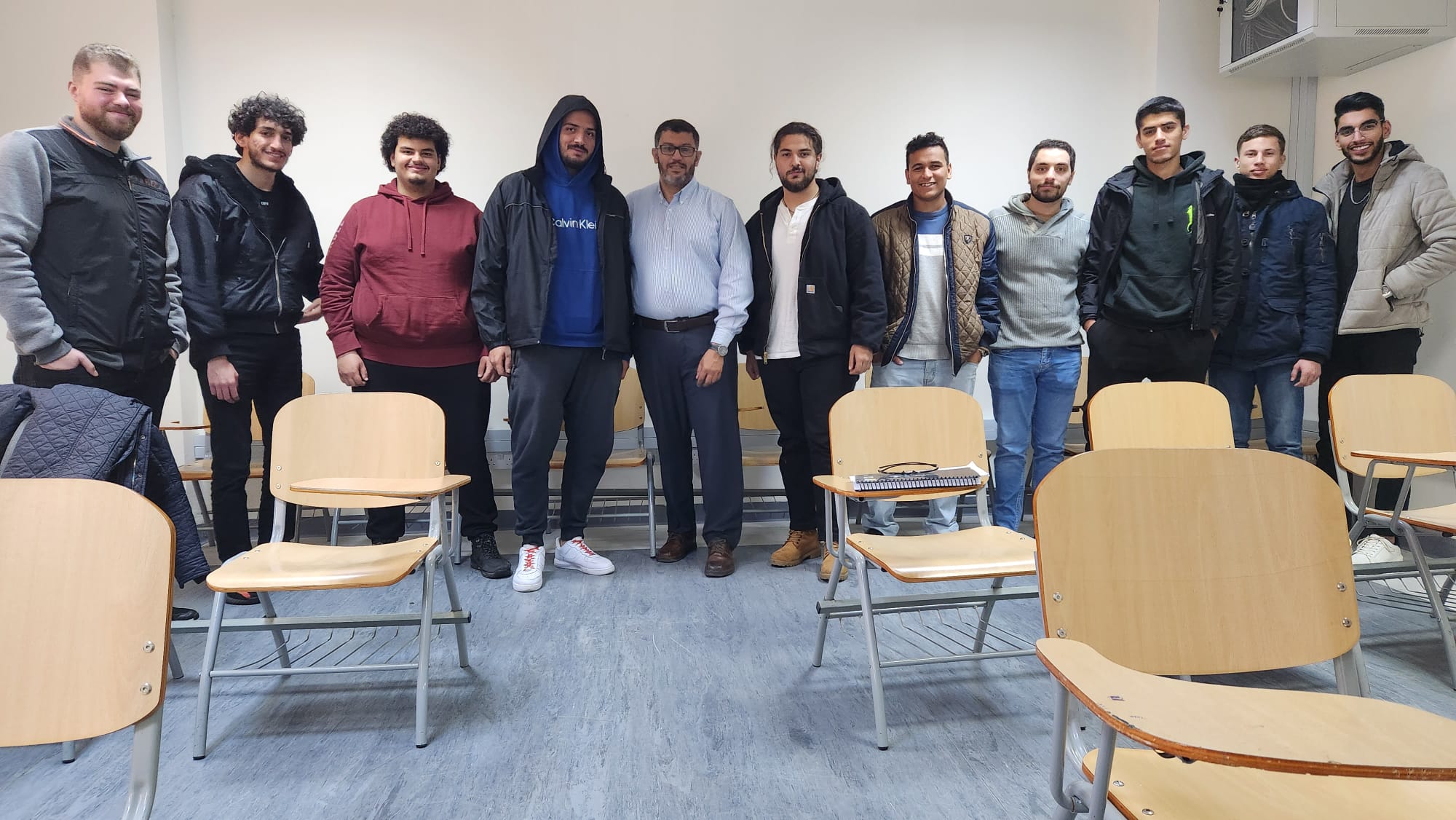
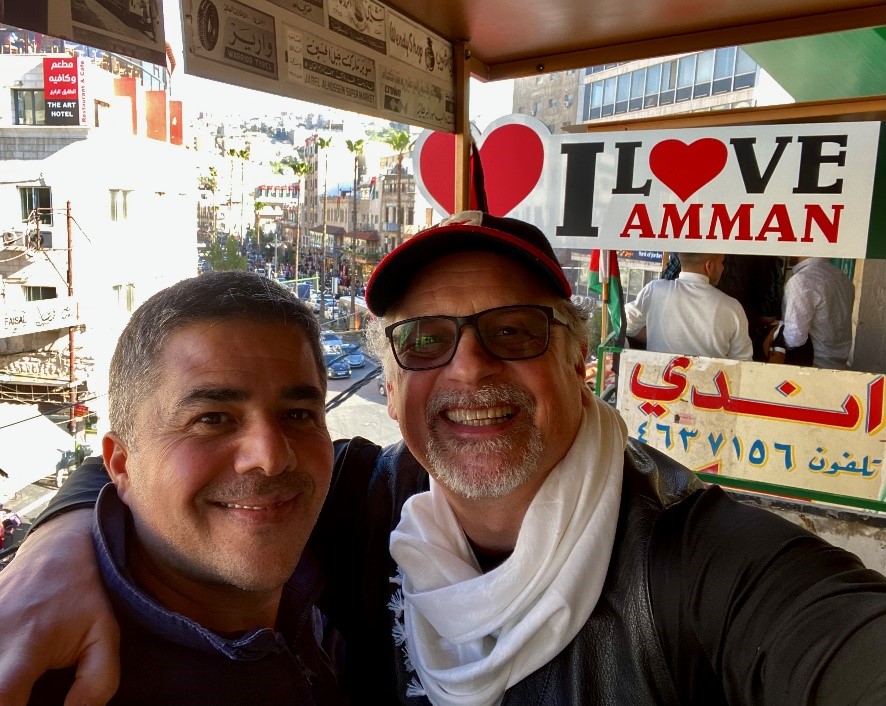
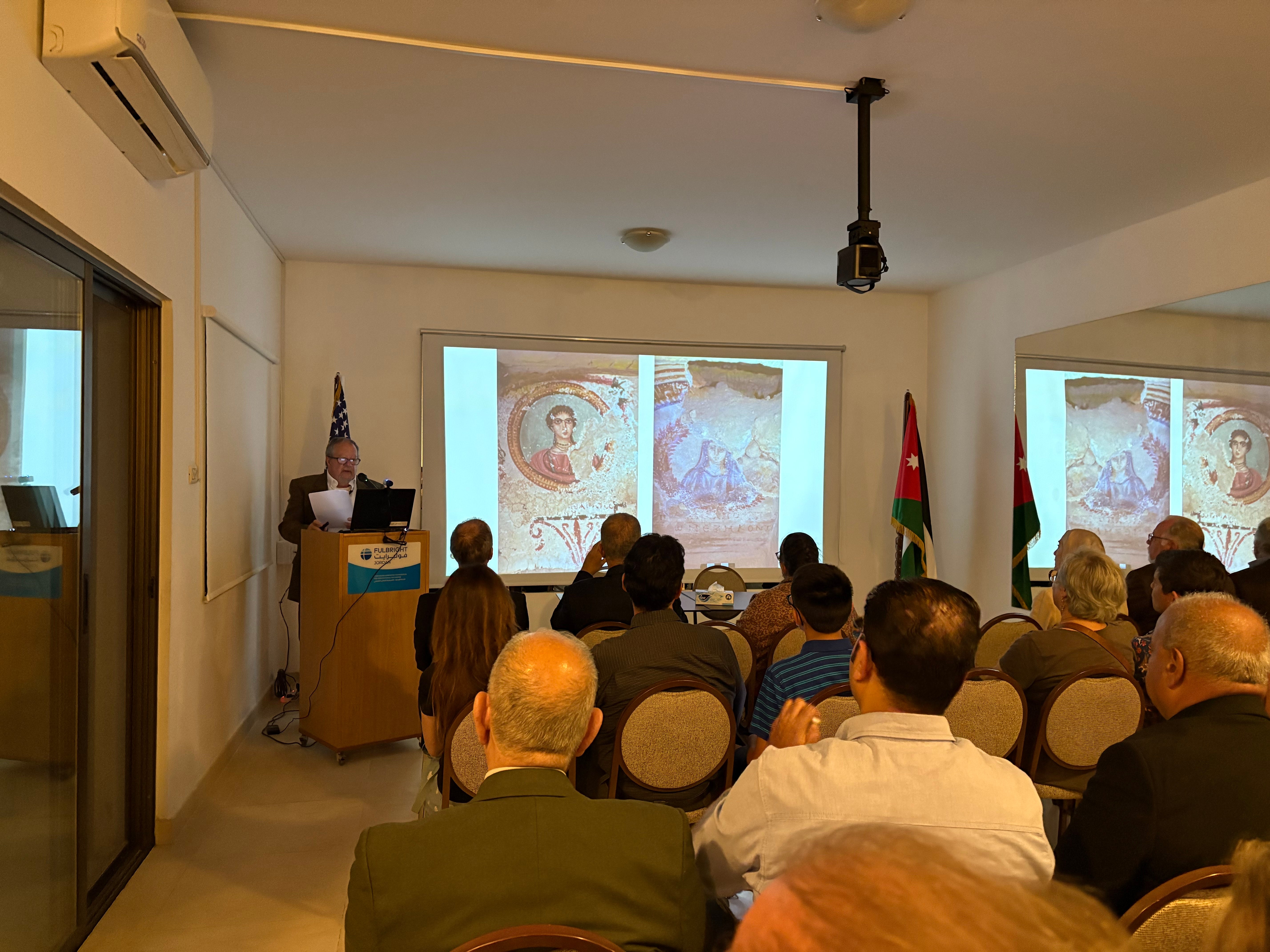
Visit our Scholar Directory to view and search all Fulbright alumni. You can also learn more about Fulbright Alumni Ambassadors.
While Arabic proficiency is not required and all teaching will be in English, grantees may occasionally need to use basic Arabic for classroom instructions and student support.