

All Disciplines (Research)
Indonesia
Number of recipients
In addition to being a prestigious academic exchange program, the Fulbright Program is designed to expand and strengthen relationships between the people of the United States and citizens of other nations and to promote international understanding and cooperation. To support this mission, Fulbright Scholars may be asked to give public talks, mentor students, and otherwise engage with the host community, in addition to their primary activities.
Conduct research in applicant’s area of specialization. Research scholars should conduct research in their area of expertise. Projects may focus on contemporary Indonesia or be comparative in nature. In addition to research, scholars may be asked to give public talks, advise students, train Indonesian research team members, and engage with the academic community.
Preference will be given to projects that address issues of public concerns in Indonesia and involve collaborations with Indonesian scholars.
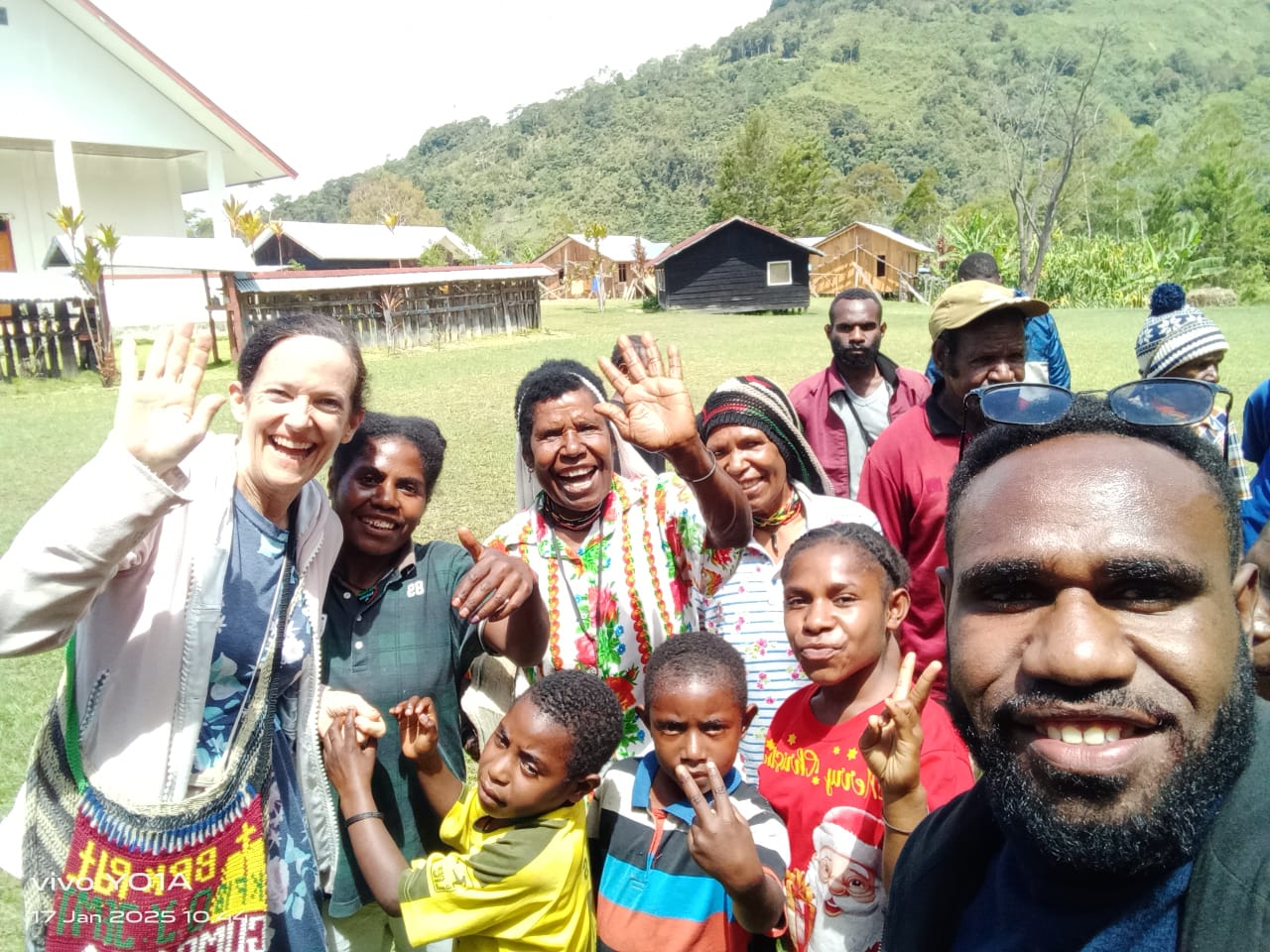
Any universities, research institutions, think tanks, and non-profit organizations throughout Indonesia, depending on research permit approval. Please be advised that certain locations may be restricted according to Indonesian Government policy. For instance, projects in Highland Papua may not receive government permission. However, in general Indonesian government is currently more lenient in giving research permissions to foreign researchers.
Five to ten months for research grants. Grants fewer than five months are not available due to permit restrictions.
Research grants can begin anytime from September 2027 through May 2028, pending the research permit and visa approval by the Indonesian government.
Scholars who plan to be accompanied by their school-age children during the grant period must be flexible with the starting date of their grant, as that may not always coincide with the beginning of the academic year in Indonesia.
Additional funding will be available to scholars for academic-related travel (up to three trips) within Indonesia. Each trip must have an academic focus, such as visiting an academic institution, and must include lectures or other academic programs. Each trip and academic program must be approved by the Commission prior to travel. Commission staff can assist with contacts at other institutions.
Fulbright scholars are also encouraged to do engagement projects with their host institutions during their grants. Projects approved by the commission will receive funding.
Scholars can also apply for additional research support and use the funds to cover research expenses such as research assistants, equipment, transportation, etc.
Fulbright East Asia Pacific Regional Travel Program
As conditions allow, Fulbright Scholars in the East Asia and Pacific (EAP) region may have the opportunity to apply for funds to support short-term (3-14 days) travel to other countries in the EAP region for activities such as lectures, workshops, graduate or faculty seminars, master classes or recitals, curricular advising, or panel presentations. EAP Regional Travel Program funding covers transportation and accommodations if necessary. Regional Travel Program activities/host sites should not be included in the initial Fulbright application. Scholars may start the process of seeking out invitations for short-term activities in other EAP countries once notified that they have been selected for a Fulbright grant but will only be able to apply for travel program funds, conditions permitting, once they have actively started their Fulbright grant in their host country. Scholars on Flex grants are not eligible for the regional travel grant.
All applicants must meet the Program eligibility requirements (click to review the requirements).
A letter of invitation is strongly preferred, since it is required by the Government of Indonesia when applying for the permit and visa. The invitation should come from higher education institutions or state or private research and development centers. Some NGOs are also eligible as host institution. AMINEF can assist in providing information about potential host institutions.
Indonesian language fluency sufficient to complete the research project is recommended. Applicants without Indonesian language skills should explicitly address the issue in their discussion of the feasibility of the project in their project proposal.
Academics must have a record of scholarly publications.
Qualified professionals must have recognized professional standing and substantial professional accomplishment in their field.
List of accredited institutions in Indonesia
List of universities in Indonesia by QS
Information on BRIN Ethical Clearance process
American Indonesian Exchange Foundation (AMINEF)
U.S. Department of State information on Indonesia
For further information, contact AMINEF.
For more information on the Fulbright U.S. Scholar Program, please visit our East Asia and the Pacific regional webpage and view our schedule of upcoming webinars.
Email the East Asia and the Pacific Team with questions about applying.
$2,500 per month
$1,400 - $1,800 per month will be provided to Fulbright scholars to arrange their own housing.
Housing allowance varies depending on the number of accompanying dependents and location/city of the assignment.
Roundtrip international travel covered by AMINEF for the Fulbright scholar on a U.S. flag carrier in economy class only.
Travel for one accompanying dependent is also provided. The accompanying dependent must be present in Indonesia during the full grant period to qualify, due to complicated permit procedures. According to Indonesian immigration law, only spouses with marriage certificates and children under 17 years qualify as dependents. To obtain visa for a child, marriage certificate of the parents will also be required.
One time excess baggage allowance: $750
One time research/relocation allowance: $750 (for research grants)
For Fulbright U.S. Scholar awards, AMINEF will reimburse scholars for dependent tuition up to a maximum of $10,000 per school-age child in grades K-12, for up to two children per family. In order to be reimbursed, receipts from the school(s) in Indonesia where the children are enrolled must be presented to AMINEF. This is a one-time reimbursement only. Please note that while this amount may cover costs at many local Indonesian public and private schools, it may not cover the full tuition costs of many international schools. Any tuition above the one-time $10,000 allowance per dependent is the sole responsibility of the Fulbright scholar.
Dependents must accompany the grantee for at least 80% of the period abroad and a minimum of one semester in order to qualify for additional dependent benefits. Dependent benefits are not provided to Flex grantees.
For metro areas, especially larger cities in Java and Bali, the estimated cost of living per day (meals and transportation) is between $30-$50. The rental cost for apartment or housing is $500-$1,500 per month. As for the smaller cities, especially outside of Java and Bali, the estimated cost of living per day (meals and transportation) is between $20-$30. The rental cost for apartment or housing is $300-$700 per month.
Monthly local transportation allowance (based on city of assignment): $400-$500 per month
One-time IMEI/customs allowance of $300 for the Fulbright scholar.
AMINEF will cover permit and visa fees for Fulbright scholar and one dependent. Supplemental permit allowance will be available for Fulbright research scholars who will enter national parks/conservation areas.
For Fulbright U.S. Scholar awards, scholars are encouraged to take advantage of a two-week intensive Indonesian language course in Indonesia during their grant period. AMINEF will assist in arranging this training and pay the training provider as well as transportation and accommodations if the training site is other than the scholar's teaching/research site.
Final grant amounts will be determined prior to the start of the academic year and are subject to the availability of funds. The United States Department of State and the Fulbright Commission in the host country reserve the right to alter, without notice, participating countries, number of awards and allowances.
Indonesia
Living in Indonesia
When you think about Asia, Indonesia might not be at the forefront of your mind. However, do you know that Indonesia is the world's fourth most populous nation and third largest democracy? Although quite big, Indonesia is still considered a hidden gem of Asia. With more than 17,000 islands, this vast archipelago is rich in natural resources and possesses exceptional biodiversity. Its culture and heritage--with numerous ethnic groups and hundreds of local languages--matches its natural variety of life. Since political reform begun in 1998, Indonesia has worked to strengthen its democratic governance, and as the largest economy in Southeast Asia, it is critical to regional stability.
Indonesia, as the United States, is a very diverse country. Where you live will create a unique experience that will be different than if you live in another city or island. But, rest assured, the experience will be memorable wherever you live in Indonesia, whether it's in the fishing community in Flores, mountainous village in Central Java, or the crowded city of Medan in North Sumatra.
Some Pro Tips
Finding housing in Indonesia is perhaps not always easy, but many housing agencies can help scholars navigate this process. Host institutions can also assist since they know more about the local environment. Apartments are more common in larger cities, while in smaller cities, options range from rental homes, boarding and guest houses, and home stays.
Most cities now have online transportation service that can be accessed through apps, like Gojek and Grab. Make sure you download these apps before you depart for Indonesia. In large cities, buses, trains, and taxis are common and in most places, it is possible to hire a car and driver for longer journeys in and out of town.
For scholars who bring dependents, there are more options for International (English-language) schools in larger cities, such as Jakarta, Bandung, Surabaya, Yogyakarta, and Denpasar.
For more information about living in Indonesia, please access this link.
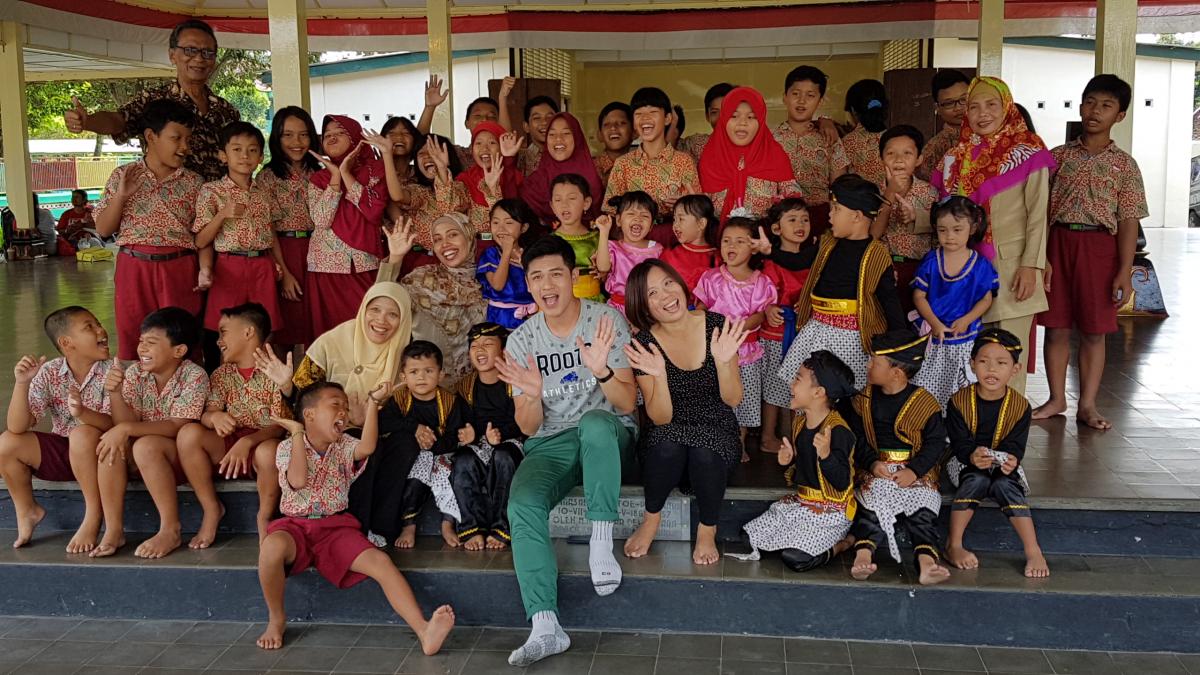 Dr. Juiching Wang (U.S. Scholar 2016) conducted research on
Dolanan Anak, traditional Javanese Children's singing games,
and its implementation in the school teaching and curriculum.
Support from AMINEF/Fulbright Indonesia
During your grant, AMINEF/Fulbright Indonesia will help you to acclimate with life in Indonesia. AMINEF will prepare you before your departure to Indonesia through a series of webinars and virtual orientations, where you can also meet with your fellow Fulbright scholars and chat with some Fulbright alumni.
Upon your arrival in Jakarta, AMINEF will invite you to join the arrival briefing at the office. Besides giving more information and tips about living and working in Indonesia, this briefing also gives you the opportunity to meet with our team in real life, after only communicating via online so far.
And throughout your grant, you will be given other opportunities to attend Fulbright Indonesia events, including a joint conference with other US Fulbrighters, a Pre Departure Orientation for Indonesian Fulbrighters, and sitting at the panel for Fulbright selection interviews.
We at AMINEF would like you to have the most impactful and valuable experience, and we are ready to help you achieve this by connecting you with the extensive network of Indonesian Fulbright alumni all over Indonesia. This network will enhance your Fulbright experience, since you can find many ways to share your project or expertise with them by visiting their institutions.
If an applicant would like to talk to a former US Fulbright scholar to Indonesia, AMINEF will be happy to make this connection. Our website also provides stories and pictures from former scholars, and a list with current Fulbright grantees.
Visit our Scholar Directory to view and search all Fulbright alumni.
Some testimonials from previous Fulbright scholars:
"I had a wonderful experience teaching at a state university in Jakarta, Indonesia. It was a profound experience for me both personally and professionally. I couldn't have done it without the local staff's help. AMINEF proved to be my home away from home." (Dr. Sunny Owens, 2024 Fulbright Scholar, teaching Communications at State University of Jakarta)
"The Fulbright provided my family with an opportunity to live in a vastly different culture. My children learned more about themselves in this experience than anything else we have ever done for them. They also learned how unique and beautiful the different cultures in the world are." (Dr. Jared Whitehead, 2024 Fulbright Scholar, conducting research with Bandung Institute of Technology)
Visit our Scholar Directory to view and search all Fulbright alumni. You can also learn more about Fulbright Alumni Ambassadors.
Important information to consider before applying
Foreign researchers to Indonesia are required to seek Ethical Clearance and Research Permit from the National Agency and Innovation (BRIN) and Limited Stay visa for Research Activities (C315) from the Indonesian Directorate General of Immigration.
AMINEF will assist grantees in navigating the process to secure the necessary permits and visas, and grantees must also work with their host institutions to apply for the visa. Detailed procedures for obtaining a research permit will be communicated to grantees after selection.
Permission to enter more than one national park/conservation area will require a longer permit processing time and incur greater expense.
Permission to move samples will require a specific permit process and oftentimes it is not possible for researchers to obtain this permit.
Upon finishing research, foreign researchers may also be asked to submit data collected from their field research in Indonesia to BRIN through an online research repository. According to Indonesian Research Law, foreign researchers and their Indonesian collaborators are also expected to jointly publish the result of their research in an accredited international or national academic journal.