

All Disciplines
Nepal
Number of recipients
In addition to being a prestigious academic exchange program, the Fulbright Program is designed to expand and strengthen relationships between the people of the United States and citizens of other nations and to promote international understanding and cooperation. To support this mission, Fulbright Scholars may be asked to give public talks, mentor students, and otherwise engage with the host community, in addition to their primary activities.
Teaching/Research:
Fulbright Teaching/Research Scholars in Nepal engage in activities combining teaching and research, with a required 80% teaching and 20% research breakdown. Teaching responsibilities are limited to two courses per semester, amounting to six hours of teaching per week.
- Flexible Opportunities: Candidates may affiliate with universities across Nepal’s provinces for meaningful research and teaching engagements.
- Proposal Review: The Fulbright Commission/Selection Committee evaluates the quality and feasibility of proposed collaborations during the review of semi-finalist applications.
- Support for Affiliations: Applicants needing help connecting with host institutions should contact the Fulbright Commission well in advance of the application deadline to facilitate relationships with potential host organizations.
Research:
U.S. scholars can conduct independent or collaborative research in Nepal that addresses clearly defined research questions relevant to their academic field. Research may be carried out in partnership with Nepali universities and research institutions.
Professional Projects:
U.S. scholars, professionals, and artists can engage with relevant institutions, communities, and practitioners in Nepal to explore themes and practices related to their professional field. Professional Projects may involve collaboration with universities, government agencies, non-governmental organizations (NGOs), cultural institutions, community-based organizations, media houses, museums, hospitals, schools, or arts and heritage organizations, depending on the applicant’s field of expertise.
Applicants are welcome to propose any appropriate institution. A list of universities in Nepal can be found here: https://ugcnepal.edu.np/pages/university-7/
Examples of institutions that have hosted Fulbright Teaching/Research Scholars in the past include:
- TU, Faculty of Humanities and Social Sciences
- TU, Central Dept. of Environmental Studies
- TU, Institute of Forestry, Pokhara
- TU Institute of Engineering
- TU, Tri-Chandra Multiple Campus
- TU Central Dept. of Geography
- TU, Central Dept. of Sociology, Governance Lab
- TU and Nepal Music Center
- KU, Nepal Ambulance Service and Dhulikhel Hospital
- KU, School of Engineering
- KU School of Medical Sciences
- KU, School of Medical Sciences Dept. of Dentistry
Other potential institutions for collaborations include:
- Patan Academy of Health Sciences, Lalitpur
- Agriculture and Forestry University, Rampur, Chitwan
- Far-Western University, Kanchanpur
- Gandaki University, Tanahun
- Lumbini Buddhist University, Lumbini
- Madhesh Agriculture University, Rajbiraj, Saptari
- Madhesh Institute of Health Sciences, Janakpurdham
- Manmohan Technical University, Budhiganga
- Mid-West University, Birendranagar
- Nepal Open University, Lalitpur
- Pokhara University, Pokhara
- Purbanchal University, Biratnagar
- Rajarshi Janak University, Janakpurdham
- University of Nepal, Kathmandu
Note: The above is not an exhaustive list of potential institutes for collaboration but a general guide.
Teaching/Research:
- Minimum award duration is 5 months, maximum duration is 7 months
- Scholar can begin in either mid-July 2027 or mid-January 2028
- Flex option not available
Research:
- Single-visit research proposals are for 6 months
- Flex grants can be 4-5 months in total duration
- Grants may begin any time after mid-July 2027
- Regular grants must be completed by September 30, 2028
- Flex grants must be completed by September 30, 2029
Professional Projects:
- Single-visit projects are for 6 months
- Flex grants can be 4-5 months in total duration
- Grants may begin any time after mid-July 2027
- Regular grants must be completed by September 30, 2028
- Flex grants must be completed by September 30, 2029
The Flex Award is designed for scholars who require multiple visits to the host country. This option allows grants to be conducted over two or three short segments. Applicants must select Flex in the application form, and clearly describe their plans for Flex in their project statement, including a project timeline. Flex grantees may be asked to give public talks, mentor students, and otherwise engage with the host-country academic community.
Flex grants are only available for research and professional projects. Flex grants may begin after mid-July 2027 and be completed by September 30, 2029. Minimum length of total grant is 4 months, and maximum is five months. Minimum length of one segment of grant is 1 month, and maximum is 4 months.
Nepal offers diverse academic and project opportunities across its leading universities and institutions. While applications are welcome in all relevant disciplines, the following specializations are particularly encouraged:
Kathmandu University and Tribhuvan University
- Business Administration: Management, finance, accounting, marketing, human resource management, organizational development, management information systems, entrepreneurship, advanced research methodology, advanced quantitative techniques/statistics
- Engineering: Electrical, civil, geomatics, computer, environmental, chemical, mechanical engineering; architecture
- Medical and Biological Sciences: Pharmacy, pharmaceutical science, biotechnology, environmental science, medical education (including anatomy, physiology, pharmacology, pathology, microbiology, public health), other clinical specialties
- Arts and Social Sciences: Fine arts (painting, sculpture, performance arts), music (folk music), community development, media studies, economics, development studies
- Education: Educational leadership, math education, English language education, curriculum, instruction
Patan Academy of Health Sciences
Applications are particularly encouraged in the following fields:
- Basic Sciences: Anatomy, biochemistry, pharmacology
- Public Health: All specializations
Other Universities in Nepal
Applications are welcome in all relevant specializations.
All applicants must meet the Program eligibility requirements (click to review the requirements).
Applicants who need assistance in identifying an institution with which to affiliate can contact the Fulbright Commission in Nepal for guidance prior to submission of the application.
Contact Senior Program Officer - Nishtha Rajbhandari (nishtha@fulbrightnepal.org.np).
Local language fluency sufficient to complete the research project is recommended. For applicants without local language proficiency, the feasibility of conducting the project must be demonstrated in the project statement. Completion of the Language Proficiency Report(s) optional. (Please note that hiring local language translators and interpreters is common for researchers in Nepal and the Fulbright Commission can assist with recommendations if necessary.)
Applicants for academic placements require a Ph.D. or other terminal degree in the applicant’s field. In exceptional cases, for artists or professionals (and for some institutions only), recognized professional standing and substantial professional accomplishments may be considered in lieu of a Ph.D. or other terminal degree. All applicants must have at least seven years of experience.
Nepal Commission Website: USEF-Nepal (Fulbright Commission in Nepal)
Webinar Resources: For more information on applying, including alumni perspectives, please view our webinars on Fulbright Opportunities in South Asia.
Contact for Support:
- South and Central Asia Team : southcentralasia@iie.org
- Senior Program Officer, Fulbright Commission Nepal - Nishtha Rajbhandari : nishtha@fulbrightnepal.org.np
- Stipend (All categories): $3,600 per month. Grantees are responsible for arranging their own housing.
- Incidental Allowance (only Teaching/Research):
One time allowance of $1,200 to cover minor expenses related to grant activities.
- Round-trip international travel arranged by the Fulbright Commission
- Excess baggage: reimbursement of up to $500
- Settling-in allowance: $500
- Flex grants: round-trip travel for each segment of the grant
- Teaching/Research: $800
- Research: None
- Professional Projects: None
1 dependent* round-trip international travel covered only if dependent remains in country for 80% of grant duration. (*Dependent = spouse, or child below 21 years of age). This is not available for Flex grants.
Dependents must accompany the grantee for at least 80% of the period abroad and a minimum of one semester in order to qualify for additional dependent benefits. Dependent benefits are not provided to Flex grantees.
Estimated Cost of Living: Housing costs vary depending on the location, size, and quality of the residence, starting from $250 per month for a room with kitchen and more for apartments or houses with amenities. For day-to-day expenses, $20 would suffice for one person cooking at home. Dining out could be as high as $30 per meal at a good restaurant.
Travel and Transportation: Travel for both Nepalese and foreigners has been made easy due to the advent of ride apps such as Pathao and InDrive. Public buses are cheaper but congested. Scholars are advised to live near their research or host institution location to reduce commuting.
South and Central Asia Fulbright Regional Travel Grant
Fulbright Scholars in the South and Central Asia (SCA) region can apply for a regional travel grant, supported by the U.S. Department of State’s Bureau of Educational and Cultural Affairs. This grant allows scholars to participate in various professional activities at academic institutions or non-profit organizations in eligible SCA countries:
- Eligible Countries: Bangladesh, India, Kazakhstan, Kyrgyz Republic, Nepal, Maldives, Pakistan, Sri Lanka, Tajikistan, Turkmenistan, and Uzbekistan
- Eligible Activities: Faculty and student lectures, seminars, conferences, curriculum development, public lectures, panel discussions, needs assessments, and more Arts scholars may engage in master classes, recitals, exhibitions, or cultural consultations. Note that research activities are not covered under this grant.
Grant Coverage: The grant provides travel expenses to and from the host country, and lodging may be arranged by the host institution.
Application Details:
- Applications are only accepted once scholars are in-country on their Fulbright grant.
- Due to limited funding, each scholar is eligible for only one Regional Travel Grant during their Fulbright tenure.
- All travel plans must be approved by the Fulbright Commission in the host country before departure.
South and Central Asia Fulbright Conference
The South and Central Asia (SCA) Fulbright Conference brings together Fulbright U.S. Scholars and U.S. Student Researchers to discuss each other’s work, network, and share their experiences as international exchange participants. Funding for the conference is provided by the United States Department of State’s Bureau of Educational and Cultural Affairs. The conference is typically held within the SCA region in February or March, and financial assistance to attend is provided. To be eligible, participants must be on their Fulbright grants at the time of the conference. Please note that conference plans are subject to change depending on programmatic or regional considerations.
Final grant amounts will be determined prior to the start of the academic year and are subject to the availability of funds. The United States Department of State and the Fulbright Commission in the host country reserve the right to alter, without notice, participating countries, number of awards and allowances.
Nepal
Nepal offers a unique and transformative experience for Fulbrighters, blending its rich cultural heritage with a dynamic landscape of political and social change. In recent decades, the country has undergone significant transition, including the adoption of a federal constitution in 2015 that shifted key decision-making powers to provincial levels, empowering communities across its diverse regions.
With 40.33% of its population aged 16-40 (as per the 2011 Population and Housing Census), Nepal is a youthful nation ripe with potential. However, its educational infrastructure faces challenges that call for improvement, presenting important opportunities for teaching, research, and collaboration between U.S. and Nepalese institutions. While resources in Nepalese higher education may be modest compared to those in the U.S., Fulbrighters often find enthusiastic colleagues and motivated students eager to engage with contemporary global issues.
Success as a Fulbright grantee in Nepal requires patience, adaptability, a thirst for adventure, and a good sense of humor. These qualities help scholars navigate the cultural, logistical, and environmental nuances of living and working in this Himalayan nation.
Academic Environment and Scheduling
Nepalese institutions collaborating with the United States Educational Foundation in Nepal (USEF-Nepal) provide diverse opportunities for teaching and research. Academic calendars vary, so Fulbright Scholars typically begin their programs in July/August or January. Applicants should confirm their ideal grant dates when requesting an invitation letter from a host institution.
Family and Healthcare
For scholars with children, proximity to international-standard schools like Lincoln School and Ullens School is a priority. Healthcare needs are supported by high-quality clinics such as CIWEC Hospital and the Nepal International Clinic, which cater to international patients and have an established reputation.
Nepal’s unique challenges and vibrant opportunities make it an inspiring destination for Fulbright grantees. Whether teaching, conducting research, or exploring Nepal's culture and landscapes, scholars often find the experience deeply rewarding and transformative.
For grantee profiles: https://usefnepal.org/grantee/fulbright-scholar-award/
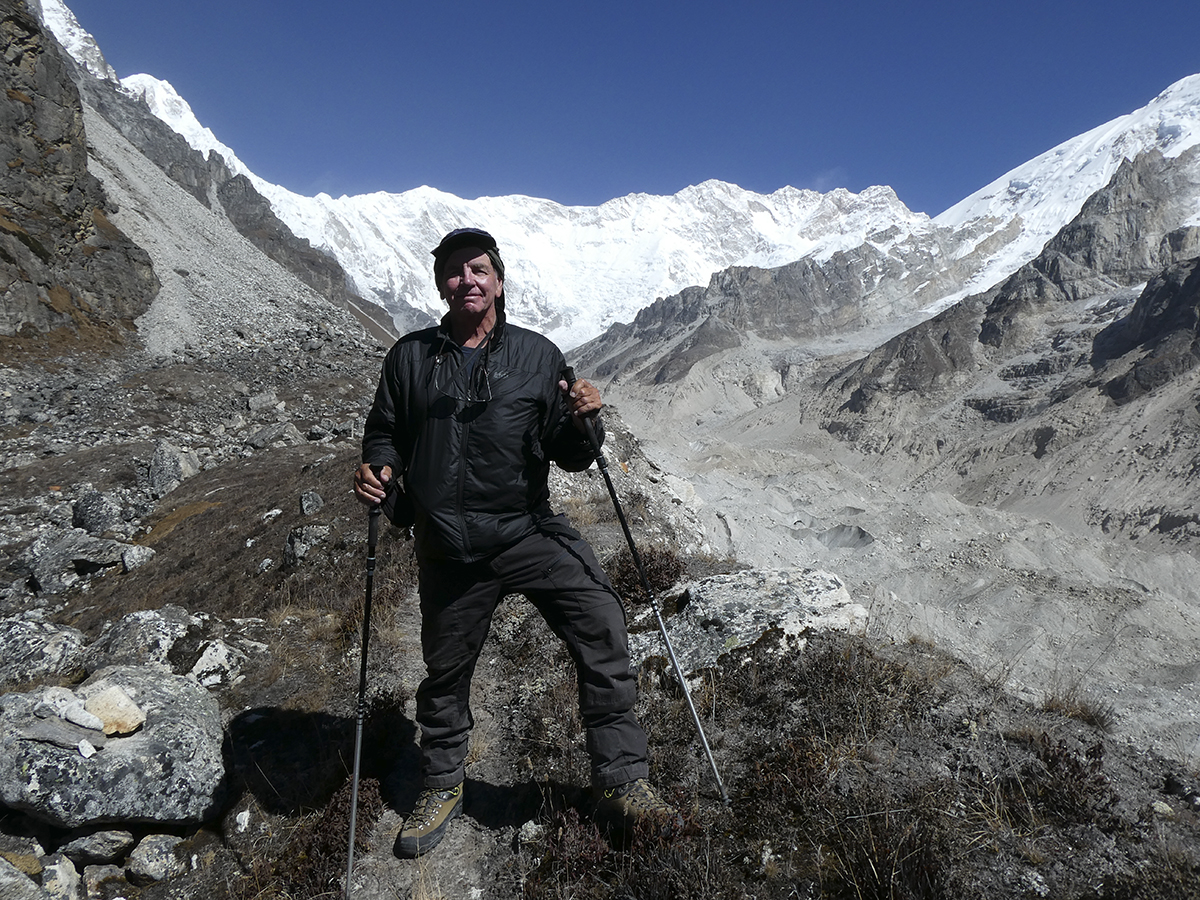
Visit our Scholar Directory to view and search all Fulbright alumni. You can also learn more about Fulbright Alumni Ambassadors.
Kathmandu University (KU)
For additional questions, contact Ms. Jyoti Pradhan (jyotipradhan@ku.edu.np)
Tribhuvan University (TU)
Patan Academy of Health Sciences (PAHS)