1789506000


Fulbright Scholar Award
All Disciplines
Romania
Application Deadline
Tuesday, September 15, 2026
Award Code
271394-RO
Activity Type
Professional Project
Research
Teaching
Teaching/Research
Degree Requirements
PhD (or other terminal Degree)
Required
Career Profile
Artists
Early Career Academics
Mid-Career Academics
Professionals
Senior Academics
Community College Faculty
Number of recipients
Approximately
15
Award Start Period
October 2027 - April 2028
Award Length
3 months, or 4 months, or 5 months, or 6 months, or 7 months, or 8 months, or 9 months
Flex Option
No
Multi-Country/Area Award
No
Disciplines
Projects are sought in all disciplines
Scholars selected for this award can choose to
Advise and/or mentor students
Assist in faculty, curriculum, and/or program development
Conduct a research project designated by the host institution
Conduct a research project of the applicant’s choosing
Teach graduate and/or undergraduate courses designated by the host institution
Teach graduate and/or undergraduate courses of the applicant’s choosing
Conduct a professional and/or artistic project
In addition to being a prestigious academic exchange program, the Fulbright Program is designed to expand and strengthen relationships between the people of the United States and citizens of other nations and to promote international understanding and cooperation. To support this mission, Fulbright Scholars may be asked to give public talks, mentor students, and otherwise engage with the host community, in addition to their primary activities.
Award Activity
Fulbright Scholars in Romania may teach undergraduate and/or graduate courses, conduct research, or pursue professional projects according to their expertise.
For teaching-focused projects, scholars may teach up to two courses per semester and no more than three per academic year. For combined teaching and research activities, candidates can determine the percentage breakdown between the two. While projects can focus primarily on research or professional work, a teaching component is encouraged to foster academic exchange and mentorship.
In addition to their primary activities, scholars can provide guidance on curriculum or program development, assist with thesis advising, collaborate with faculty on academic projects, participate in or organize open lectures, seminars, conferences, exhibitions, or performances, and give guest lectures at other institutions. Affiliations with NGOs and other non-academic institutions are also welcome.
Locations
Location Selection: Applicant may propose an appropriate host
Locations Detail
Applicants may indicate any appropriate host institution in Romania (university, research institute, NGO, or other relevant institution). Please see a list of universities in the Award Requirements tab.
Award Length and Period
- Teaching-only grants: 4 or 9 months (one or two semesters)
- Teaching/research grants: 4–9 months
- Research or professional grants: 3–9 months
One-semester teaching grants begin in October 2027 (Fall Semester) or February 2028 (Spring Semester), while two-semester teaching grants must begin in October 2027. For research or professional projects, start dates may be flexible, depending on the host institution, provided the project is conducted within the academic year for which the grant is awarded.
Flex
Flex allowed for only the following activity type(s):
All applicants must meet the Program eligibility requirements (click to review the requirements).
Citizenship/Residency Requirement
Applicants residing in the award country at the time of application or thereafter are not eligible to apply for this award.
Permanent residents of the award country are not eligible to apply for this award.
Invitation Requirement
An invitation letter is preferred.
Invitation Requirement Additional Information
Applicants are encouraged to identify a prospective Romanian host institution and to secure an invitation. For finalists whose projects are not located at a specific institution, the Commission will arrange host institution affiliation. For further information, contact Mihai Moroiu, American Program Director, Romania-U.S. Fulbright Commission in Bucharest: mihai.moroiu@fulbright.ro
Possible Romanian host universities (listed by city, non-exhaustive list):
- Arad: "Vasile Goldis" Western University of Arad; "Aurel Vlaicu" University of Arad
- Brasov: Transilvania University of Brasov
- Bucharest: Politehnica University of Bucharest; University of Bucharest; Ion Mincu University of Architecture and Urbanism; The National University of Political Studies and Public Administration (SNSPA); Bucharest University of Economic Studies; National University of Music; National University of Theatre and Film I.L. Caragiale; Technical University of Civil Engineering
- Cluj-Napoca: Babeș-Bolyai University; Gheorghe Dima Music Academy; Technical University of Cluj-Napoca; University of Art and Design
- Constanta: Ovidius University
- Craiova: University of Craiova
- Galati: Dunarea de Jos University of Galati
- Iasi: Alexandru Ioan Cuza University; Technical University Gheorghe Asachi of Iasi
- Oradea: University of Oradea
- Sibiu: Lucian Blaga University
- Suceava: Stefan cel Mare University in Suceava
- Timisoara: Politehnica University of Timisoara; West University of Timisoara
- Targu Mures: George Emil Palade University of Medicine, Pharmacy, Science and Technology
Affiliation to be confirmed by the Romanian-U.S. Fulbright Commission.
Language Proficiency Requirements
None, English is sufficient
Additional Language Requirement
All teaching will be in English; proficiency in another language is not required.
For research and professional projects, language proficiency sufficient to complete the proposed project is required. For applicants without local language proficiency, feasibility of conducting the project must be demonstrated in the project statement.
Additional Qualification Information
Applications are accepted from university and community college faculty as well as professionals, artists, journalists, scientists, lawyers, or independent scholars outside of academia who have recognized professional standing and substantial professional accomplishments.
Award Allowances
STIPEND
Instalment & monthly payment schedule:
Assistant professor or below: $4,300
Associate or full professor: $4,500
The stipend is paid in two parts: a portion is disbursed in installments to the scholar’s U.S. bank account, and the remainder is paid monthly in Romanian lei (RON), based on the average USD/RON exchange rate, as specified in the Terms and Conditions of the Award
Estimated Travel and Relocation Allowance for Grantee
TRAVEL AND RELOCATION
One-time payments, included in the 1st instalment:
Travel Allowance: $1,800
Relocation Allowance: $1,400
Community Integration Allowance: $800
Do you offer dependent benefits
Yes
Dependent Travel and Relocation Allowance: $2,200 one-time payment for one accompanying dependent / $4,400 for two or more dependents
Dependent Allowance: $300 per month for one dependent / $400 per month for two or more dependents (disbursed monthly in Romanian lei, based on the average USD/RON exchange rate, as specified in the Terms and Conditions of the Award).
Dependents must accompany the grantee for at least 80% of the period abroad and a minimum of one semester in order to qualify for additional dependent benefits. Dependent benefits are not provided to Flex grantees.
Estimated Cost of Living
Cost of living in Romania is, on average, 41% lower than in United States. Rent in Romania is, on average, 70% lower than in United States. As in most countries, prices may be higher in larger cities.
Special Award Benefits
In-country work-related travel: The Fulbright Commission reimburses travel costs for active participation (e.g. as lecturer, guest speaker, presenter, workshop facilitator) in academic activities such as conferences, seminars, public lectures, and workshops hosted by other institutions in Romania (depending on availability of funds).
Enrichment opportunities: In-country orientation (beginning of both semesters), winter holidays meeting, and end-of-the-year meeting
Final grant amounts will be determined prior to the start of the academic year and are subject to the availability of funds. The United States Department of State and the Fulbright Commission in the host country reserve the right to alter, without notice, participating countries, number of awards and allowances.
Romania
What is life like for Fulbrighters in your country?
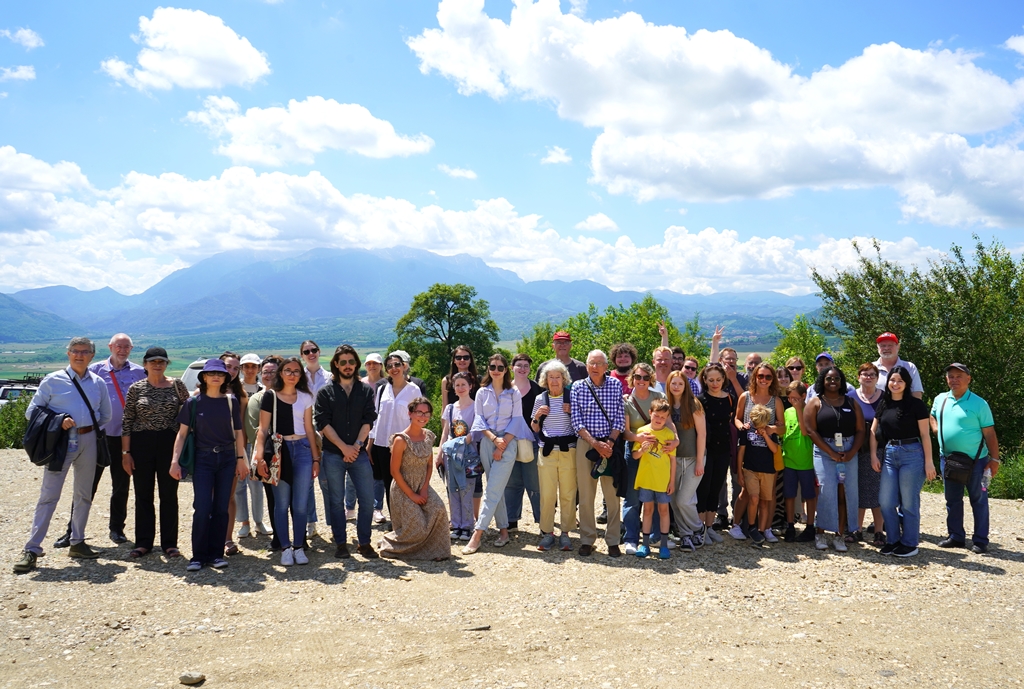
Romania is a country shaped by diverse historical and geographical influences. Situated north of the Balkan Peninsula, along the Lower Danube River and bordering the Black Sea, Romanian culture reflects a blend of Central and Eastern European traditions, with Roman, Greek, and Slavic influences. As a rapidly evolving society, both economically and socially, Romania has proven to be a welcoming and rewarding host for the Fulbright Program. Many U.S. Fulbright grantees develop lasting professional and personal connections and return to Romania for continued collaboration.
Romania’s higher education system has undergone significant transformation over the past decades, evolving from a centralized system prior to 1990 into a more open, competitive, and internationally engaged academic environment. Universities are expanding research activities, increasing student participation, and strengthening their presence in the global academic community. Internationalization and academic mobility are key priorities, and Romanian institutions are interested to collaborate with visiting scholars.
U.S. Fulbright Scholars are generally warmly received and have opportunities to engage deeply with Romania’s academic, intellectual, and cultural life. Many grantees cite their interactions with Romanian students and faculty as among the most rewarding aspects of their Fulbright experience, both professionally and personally.
The Fulbright Program in Romania
The Fulbright Program has been present in Romania since 1960, contributing to academic exchange, professional development, and mutual understanding between Romania and the United States. Since its inception, more than 3,800 Romanian and American students, scholars, teachers, artists, and professionals have participated in Fulbright exchanges across a wide range of fields.
The Romanian-U.S. Fulbright Commission was established in May 1993 through a bilateral agreement between the U.S. Department of State and the Romanian Ministry of Foreign Affairs. The Commission is a binational, non-profit organization responsible for administering and coordinating educational exchange programs jointly funded by the two governments.
Applicants are encouraged to visit the Romanian-U.S. Fulbright Commission's website for current information on various grants, but also for updates, news and testimonials from our Fulbright grantees and alumni.
For any additional information, please contact the Commission’s American Program Director Mihai Moroiu: mihai.moroiu@fulbright.ro
Romanian-U.S. Fulbright Commission's Website
Facebook: FulbrightRomania
Instagram: @fulbrightromania
LinkedIn: fulbright-romania
Previous Fulbright Recipients
Testimonials
Amy Donnella, U.S. Fulbright Scholar
"My greatest wish is that I adequately conveyed to my students how much they taught me — that I learned far more from them than I could have learned from an entire library about Romania. Because of the connections we developed, my students and I are now better able to evaluate the strengths and shortcomings of our own nations, and can better appreciate that we share the same aspirations for justice and human rights. Despite the uncertain futures, I am left with great hope. I can think of no greater value a Fulbright experience could achieve. România, te iubesc!"
Theresa L. Burriss, U.S. Fulbright Scholar
"Romania took hold of my heart in 2015 and since then has consumed my mind and soul. As with any genuine commitment, my relationship with this beautiful, complex country has grown and deepened over time as I have learned of its many tragedies, as well as its many triumphs. I have surrendered myself to Romania. [...] As I continue my Romanian journey, I marvel over the resiliency and fortitude of the people. I am fortunate to have developed close relationships, familial in many ways, with many Romanians. And I am eternally grateful to have been granted a Fulbright and honored to become part of this amazing community."
Oana Godeanu-Kenworthy, U.S. Fulbright Scholar
"My memories of my Fulbright semester are a whirlwind of colors and sensations: the whimsical architecture of Bucharest streets—familiar, yet also very much changed—the smell of coffee in Old Town, the bustle of the Gara de Nord railway station and its trains, the outlines of the mountains in Brasov, the arches of greenery of Rose Park in Timisoara, and the salty bitter taste of the Black Sea on a scorching hot weekend in June."
Visit our Scholar Directory to view and search all Fulbright alumni. You can also learn more about Fulbright Alumni Ambassadors.