1789506000


Fulbright Scholar Award
Agriculture
Uruguay
Application Deadline
Tuesday, September 15, 2026
Award Code
271292-UY
Activity Type
Professional Project
Research
Teaching/Research
Degree Requirements
PhD (or other terminal Degree)
Required
Career Profile
Mid-Career Academics
Professionals
Senior Academics
Community College Faculty
Number of recipients
Approximately
1
Award Start Period
July 2027 - September 2027 or March 2028 - May 2028
Award Length
3 months or 4 months
Flex Option
Yes
Multi-Country/Area Award
No
Disciplines
Agriculture
Environmental Sciences
Scholars selected for this award can choose to
Advise and/or mentor students
Conduct a research project designated by the host institution
Conduct a research project of the applicant’s choosing
Teach graduate and/or undergraduate courses designated by the host institution
Teach graduate and/or undergraduate courses of the applicant’s choosing
Conduct a professional and/or artistic project
In addition to being a prestigious academic exchange program, the Fulbright Program is designed to expand and strengthen relationships between the people of the United States and citizens of other nations and to promote international understanding and cooperation. To support this mission, Fulbright Scholars may be asked to give public talks, mentor students, and otherwise engage with the host community, in addition to their primary activities.
Award Activity
Conduct a professional project, research or do a combination of teaching and research (ideally 20% teaching and 80% research, but the ratio is flexible depending on the agreement between the Scholar and Host Institution). The grantee may also advise on ongoing and future research, deliver seminars or short courses to local researchers and assist in cooperative research projects in all areas related to agricultural research.
Locations
Location Selection: Award is hosted by the institution listed below
Locations Detail
National Institute of Agricultural Research (INIA) - Research may be conducted in one of the five Experimental Stations: INIA Las Brujas (Canelones), INIA La Estanzuela (Colonia), INIA Treinta y Tres, INIA Salto Grande and INIA Tacuarembó.
Award Length and Period
3 months for non-Flex awards. 4 months for Flex awards only. (Please see the Flex Description section for additional details on Flex award parameters.)
The academic year in Uruguay runs from March through December, with a break in July. Universities are closed during January and February. Grant dates are flexible and should be determined with the host institution as research in specific agricultural areas may require specific dates, even starting within the months from October through February.
Flex
The Flex Award is designed for scholars who require multiple visits to the host country. This option allows grants to be conducted over two or three short segments. Applicants must select Flex in the application form, and clearly describe their plans for Flex in their project statement, including a project timeline. Flex grantees may be asked to give public talks, mentor students, and otherwise engage with the host-country academic community.
Short-term Flex grants for teaching and/or research for two-month segments over two consecutive academic years are available during the fall and/or spring semesters. Flex grants of two-month segments over two consecutive years are possible with prior arrangement with host institution. Final approval of Flex grants will be contingent upon available funding.
Flex allowed for all activity type(s) listed in award
Segments may be proposed for up to a 2 year period
2 Segments may be proposed
Grant segments are allowed to be conducted in summer months (June, July, and August)
Yes
Minimum segment length is 2 month(s)
Maximum segment length is 2 month(s)
Minimum total award length is 4 month(s)
Maximum total award length is 4 month(s)
*Total award length is the total length (duration) of all segments and does not include time between segments.
All applicants must meet the Program eligibility requirements (click to review the requirements).
Citizenship/Residency Requirement
Applicants residing in the award country at the time of application or thereafter are not eligible to apply for this award.
Permanent residents of the award country are not eligible to apply for this award.
Invitation Requirement
An invitation letter is preferred.
Invitation Requirement Additional Information
Prospective applicants are encouraged to contact the Unit of International Cooperation: Veronica Musselli, head, and cooperacioninternacional@inia.org.uy.
Language Proficiency Requirements
Recommended (Intermediate): Spanish
Applicants are encouraged to consult the American Council on the Teaching of Foreign Languages (ACTFL) “Can-Do Statements” to determine if they are qualified.
Required Proficiency
Applicants are encouraged to register qualified language evaluator, such as a language instructor or a translator, to conduct the external assessment in the application. Being a native speaker alone does not qualify an individual to conduct the assessment.
Applicants who are native speakers do not need to complete an external evaluation.
Level of Proficiency
Intermediate
Required Languages
Spanish
Additional Language Requirement
Intermediate to advanced Spanish is preferred. Most of the INIA staff can communicate in English.
You may be asked to participate in an interview as part of the in-country selection process.
Interview Requirements
The interview will mostly be conducted in English, with only one question in Spanish.
Contacts and Helpful Links
Award Allowances
$2,600 per month, payable in U.S. dollars. Monthly housing and living allowance of $900-$1,350, based on the number of accompanying dependents. Dependents must accompany grantee for at least 80 percent of the grant period to be eligible for benefits.
Estimated Travel and Relocation Allowance for Grantee
International travel for the grantee up to $1,800; dependent travel of $800 for one dependent if dependent accompanies the grantee for at least 80 percent of the grant period. For Flex grants, round-trip travel up to $1,800 will be included for the grantee only for each segment of the grant. One-time relocation allowance of $300.
Estimated Book and Research Allowance
Allowance of $500 for educational materials to be donated to host institution upon grantee's departure: This allowance may also be used for research-related expenses.
Do you offer dependent benefits
Yes
Estimated Cost of Living
This site provides an idea of the estimated cost of living in Montevideo and in other cities in Uruguay: https://www.numbeo.com/cost-of-living/in/Montevideo?displayCurrency=USD
Special Award Benefits
During their grant period, Fulbright U.S. Scholars in the Western Hemisphere (WHA) region may apply for a short-term regional travel grant for activities such as workshops, seminars, presentations, lectures, performances, exhibits, curricular advising and similar projects at institutions in eligible WHA countries. (Argentina, Bahamas, Barbados and Eastern Caribbean, Belize, Bolivia, Brazil, Canada, Chile, Colombia, Costa Rica, Dominican Republic, Ecuador, El Salvador, Guatemala, Guyana, Honduras, Jamaica, Mexico, Panama, Paraguay, Peru, Suriname, Trinidad & Tobago and Uruguay).
The Regional Travel Program covers travel to and from the destination; lodging may be offered by the host institution. Scholars may only apply for this grant once they are in country on their Fulbright grant. Scholars who apply for the Flex award are ineligible for the Regional Travel Program. Additional information can be found on the Regional Travel Program website.
Final grant amounts will be determined prior to the start of the academic year and are subject to the availability of funds. The United States Department of State and the Fulbright Commission in the host country reserve the right to alter, without notice, participating countries, number of awards and allowances.
Uruguay
What is life like for Fulbrighters in your country?
Uruguay is often referred to as the hidden gem of South America. It is a country that consistently ranks #1 in Latin America in all international indexes referring to Democracy, Low Corruption, Respect for Rules, Transparency, Civil Freedoms and Social Mobility.
Uruguay also has a strong commitment to the environment that is embodied in laws and state policies. The country is ranked #2 worldwide in wind and solar energy.
With a literacy rate of 97.9 percent, Uruguay was the first country in the world to provide free laptops for every child and teacher at public schools.
Traditionally, Uruguay had only one public university, the University of the Republic, founded in 1849. In 2015, a new public technological university, the UTEC, started offering undergraduate degrees in Dairy Production and Management, Information Technology, and Mechatronics. UTEC is a university educational program aimed at the development of advanced human capital, applied research, technological development, and innovation in order to strengthen the development of the different regions of the country. Undergraduate education at the University of the Republic and UTEC is free.
Uruguay has four private universities: Universidad Católica del Uruguay, Universidad ORT Uruguay, Universidad de Montevideo, and Universidad de la Empresa. There are other higher education institutions such as CLAEH, the Latin American Center for Human Economy and BIOS. While most university campuses are located in the capital city of Montevideo, UTEC campuses and a few university campuses are located in the provinces.
The academic year runs from March through December, with a break in July. U.S. citizens traveling on a regular passport for a visit of less than 90 days do not need a visa. U.S. citizens traveling for a visit of more than 90 days need a visa.
Uruguay is a beautiful nation and its capital city, Montevideo, is vibrant, livable, and known for its rich cultural life. For Fulbright Scholars, Uruguay offers strong professional opportunities, welcoming colleagues and—especially for those based in Montevideo—a dynamic urban experience. Being in the country during Carnival provides a unique opportunity to connect with its Afro-Uruguayan musical legacy, particularly Candombe, and the warmth and friendliness of its people.
The goal of the Fulbright Scholar Program in Uruguay is to ensure scholars have a highly valuable experience, both academically and culturally, promoting mutual understanding between our two countries.
To learn more about Uruguay as a destination, visit the website for the Ministry of Tourism or review these promotional materials about how Uruguay is a hub for business and innovation.
Learn about the impact of the Fulbright Scholar Program in Uruguay in this report.
Please reach out to Program Officer Patricia Vargas at pvargas@fulbright.org.uy with any questions.
Previous Fulbright Recipients
Image
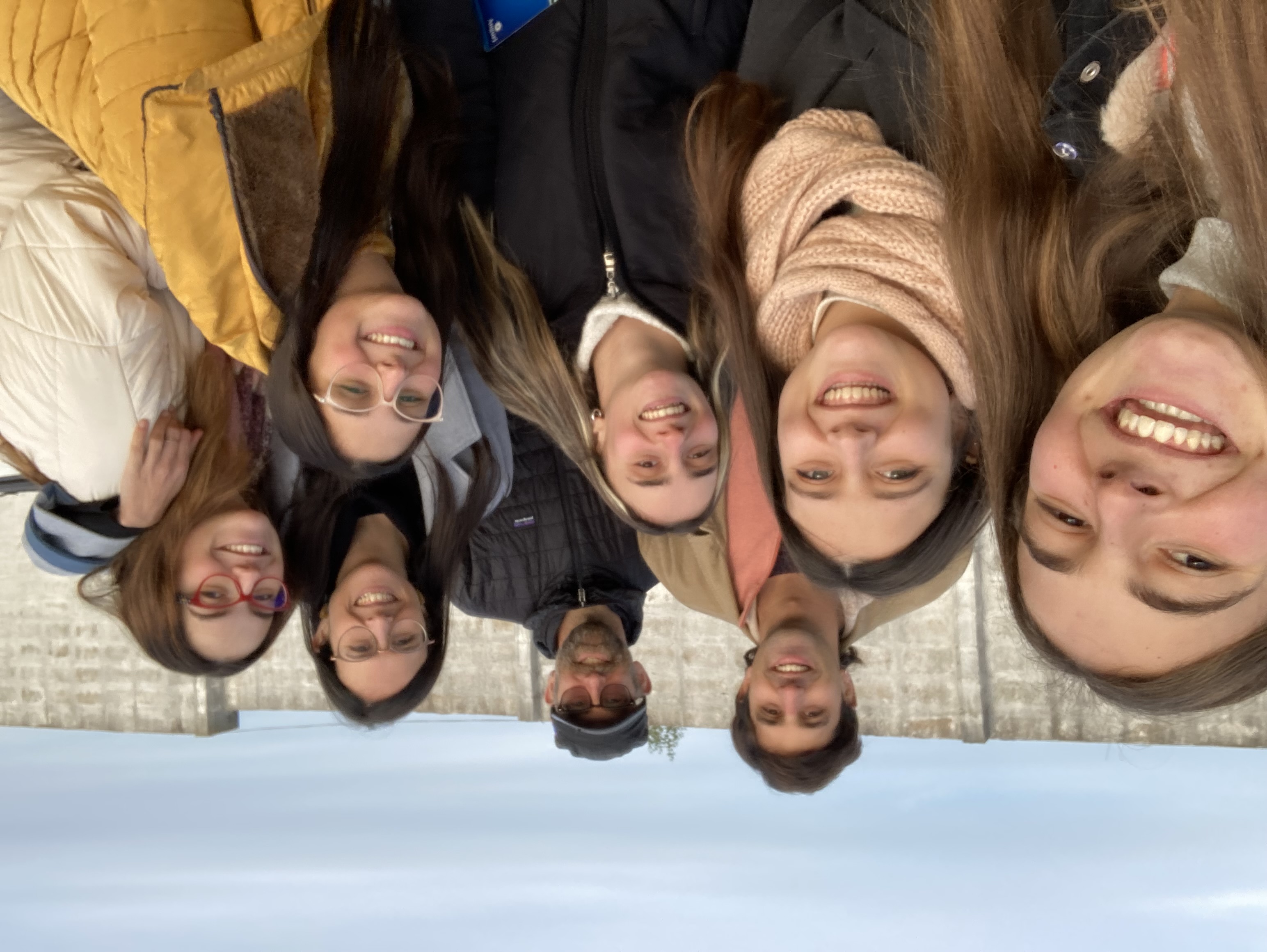
Visit our Scholar Directory to view and search all Fulbright alumni. You can also learn more about Fulbright Alumni Ambassadors.
Up-to-date laboratories, experimental fields, transportation, office space, computer facilities and access to the Internet and email are all available.
Note on citizenship/residency requirement: Those permanently residing in Uruguay at the time of application are ineligible. Those visiting Uruguay on a tourist visa--for less than 90 days--at the time of application or thereafter are still eligible to apply, as they are not considered residents.