

Fulbright Award for Research in Normandy
France
Number of recipients
In addition to being a prestigious academic exchange program, the Fulbright Program is designed to expand and strengthen relationships between the people of the United States and citizens of other nations and to promote international understanding and cooperation. To support this mission, Fulbright Scholars may be asked to give public talks, mentor students, and otherwise engage with the host community, in addition to their primary activities.
Conduct research at any university or research center in the Normandy region. Higher education and research are primarily concentrated in the following three cities: Caen, Rouen, and Le Havre. Other possible locations include: Cherbourg-en-Cotentin, Elbeuf, Saint-Lô, Evreux, Dieppe, Flers, Alençon, and Vire.
Normandy is more than a historic region, it’s a thriving hub for research and academic excellence in France. With three universities, seven engineering schools, three business schools, three schools of arts and architecture, and eight national research organizations, the region offers unparalleled opportunities for interdisciplinary collaboration.
Why choose Normandy for your Fulbright research?
- Academic Powerhouses: Caen, Rouen and le Havre are the main higher education hubs, hosting 32,000, 30,000 and 7,000 students respectively.
- Diverse Research Fields: health sciences, engineering, commerce, management, law, languages, architecture, fine arts, information and communication, logistics, technology, tourism, maritime studies and more.
- Global Reach: Over 117,000 students, including 11,000 international students, and hundreds of programs across disciplines.
- Strategic Location: At the crossroads of Europe, Normandy offers strong ties to international networks and cutting-edge research facilities.
Beyond academics, Normandy combines innovation with quality of life - a region known for its cultural heritage, dynamic economy, and proximity to Paris and major European cities.
Learn more about higher education in Normandy: https://www.choosenormandy.com/i-choose/study-in-france-normandy/university-higher-education-normandy/
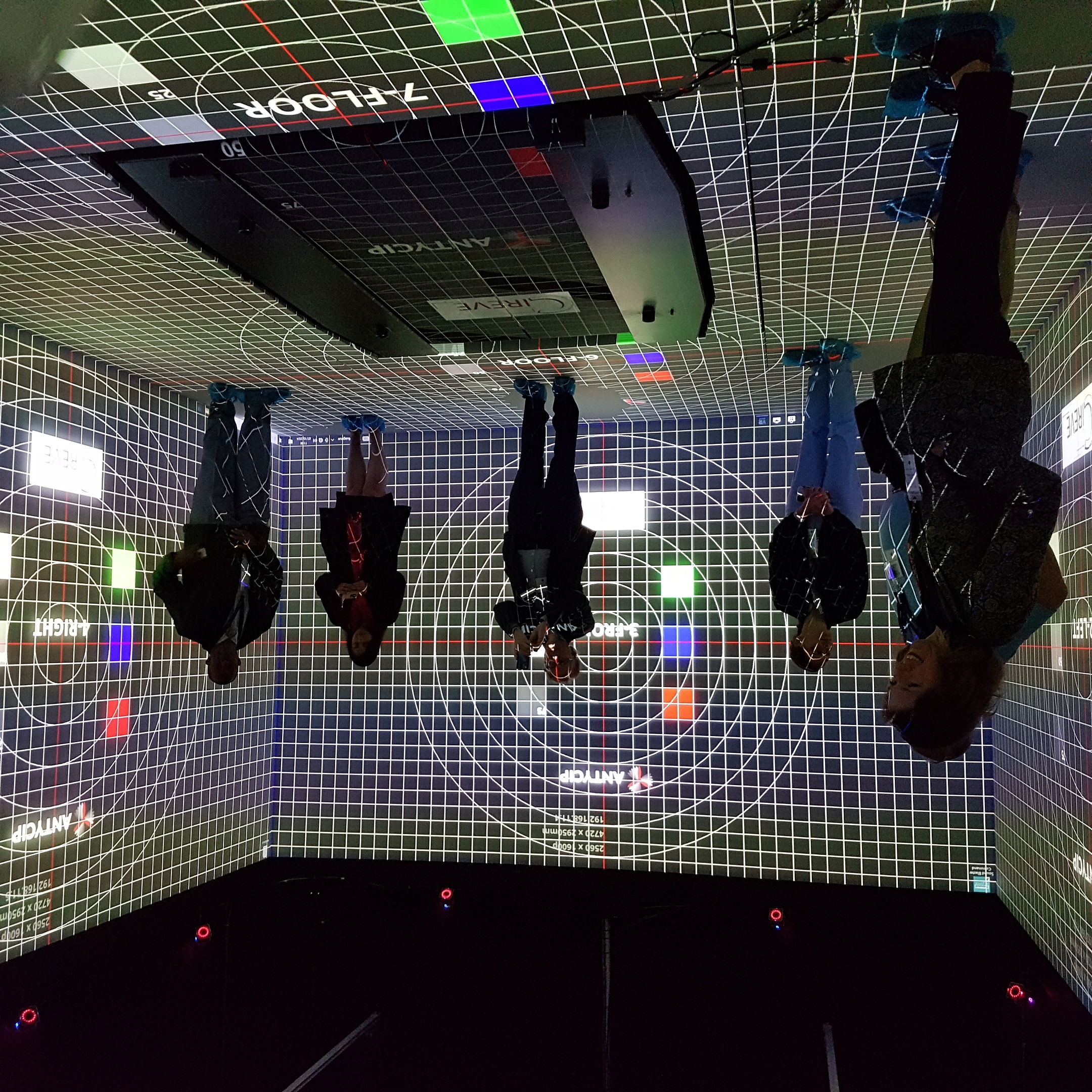
Research will take place at universities or research centers in Normandy (Normandie), France.
Grantees are expected to reside in the region for the entire duration of the award.
For general information about Normandy in English, please visit: https://www.choosenormandy.com/i-choose/study-in-france-normandy/university-higher-education-normandy/.
Why Normandy?
Normandy is one of France’s most iconic destinations, renowned for its:
- Famous beaches and historic D-Day landing sites
- Rich cultural heritage, from the Dukes of Normandy to the Impressionists
- Beautiful countryside and picturesque towns
- Exceptional cuisine, including cheeses, cider, and seafood
This unique combination of history, natural beauty, and gastronomy makes Normandy an inspiring place to live and conduct research.
The Normandy Region welcomes candidates in all fields of research, while giving priority to projects aligned with its regional specialization strategy. Preferred areas include:
- Ecological and energy transition (decarbonization, renewable marine energies, acroecology)
- Health and well-being (biotechnology, e-health, nutrition)
- Digital transformation and cybersecurity (sustainable digitilization, data security)
- Agriculture and agri-food innovation
- Marine sciences and blue economy
- Forestry and biodiversity
- Veterinary science and animal health
- Green transportation and mobility
- Risk management and resilience
- Cultural heritage (promoting local heritage, tourism innovation)
Please note: The region remains open to high-quality research projects in other fields.
Find out more about local strengths in industry : "Choose Normandy" https://www.choosenormandy.com/industries-excellence/
All applicants must meet the Program eligibility requirements (click to review the requirements).
Applicants should include a letter of invitation from a host institution located in the region. Applicants needing assistance in identifying a suitable host institution may write to Charlotte Goodwin, cgoodwin@fulbright-france.org.
Charlotte Goodwin, US Program Officer at the Franco-American Fulbright Commission
€2,800 (approx. $3,222) per month. There is no allocation for accompanying dependents. Applicants are responsible for finding their own housing, although some host institutions may facilitate the process. The Euraxess network can also help with housing and local logistics.
International travel allowance provided for grantee only. All research scholars receive a travel allowance of €1,200 (approx. $1,380).
A one bedroom apartment in central Caen, by way of example, has an average monthly rent of about 616 euros (approximately $709). A monthly public transportation pass costs 44 euros (about $50). For more information about cost of living, see: https://www.numbeo.com/cost-of-living/in/Caen.
Visa fees will be waived for Fulbright grantees and their accompanying dependents. The Fulbright Commission will provide support and guidance for the visa process.
Final grant amounts will be determined prior to the start of the academic year and are subject to the availability of funds. The United States Department of State and the Fulbright Commission in the host country reserve the right to alter, without notice, participating countries, number of awards and allowances.
France
Why France?
France has been the world's top tourist destination for over 25 years. Visitors come from all over to enjoy French cuisine, tour its famous museums and monuments, and explore its beautiful cities. More on French tourism and attractions.
The country has an excellent and accessible healthcare system, a high-quality public school system starting at nursery school, comprehensive public transportation and high-speed rail networks, and lively cultural scene.
France is also an attractive place to do research, teach, or pursue professional development. It is home to 72 universities, 227 engineering schools, 220 business schools, 45 state art schools, 22 architecture schools, and 3000 private institutions of higher education. Research is a high priority: 2.18% of the country's GDP is devoted to research and development. The CNRS (national scientific research council) produces the highest number of scientific publications in the world. More on reasons to choose France and the French research landscape.
Applicants can find useful practical information about life in France (housing, schooling, etc.) through the free national Euraxess network.
Being a Fulbrighter in France
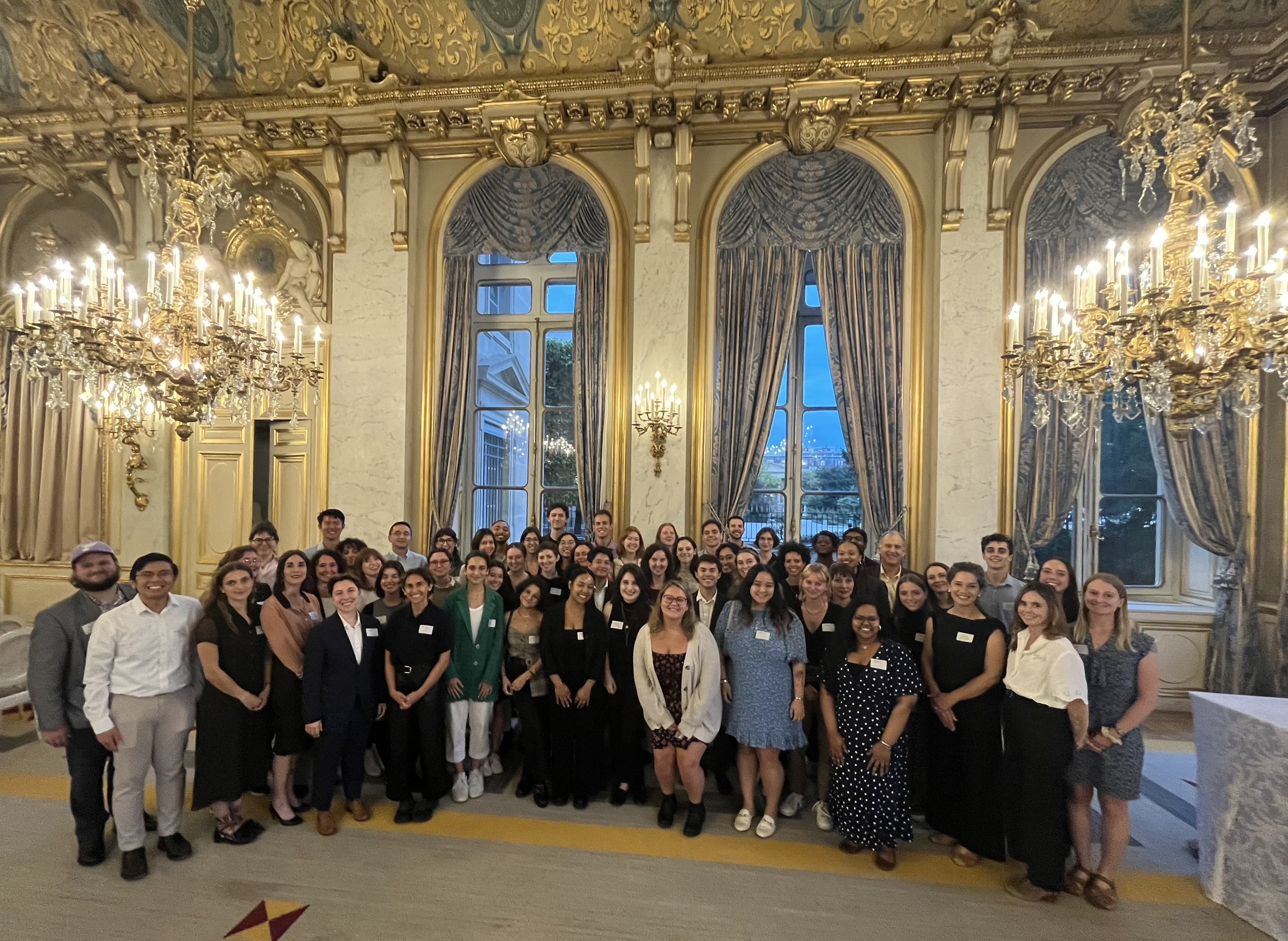
Fulbright France hosts two all-grantee events every year (orientation in September and mid-year meeting in February) in Paris. Fulbrighters gather together to get practical information, meet each other, learn about important issues in French society, and explore the cultural sites of Paris. There are also other activities on offer, including conferences, informal gatherings around a galette des rois or French cheeses, and concerts from Fulbright musicians. Fulbrighters who arrive after fall orientation are invited to attend a condensed online version.
Candidates interested in applying can visit the Franco-American Commission's website. For more detailed information, contact Charlotte Goodwin, US Program Officer at the Franco-American Fulbright Commission, at cgoodwin@fulbright-france.org.
Quotes from Fulbright scholar alumni:
"My fellowship helped me establish new connections and cement existing research collaborations with French scientists and their students in a substantial way that will carry forward for at least the next decade. The program also gave me a new window into the graduate education of French students that I will bring back to my home institution and that will benefit them and future exchanges that will occur. Finally, the experience gave me, and my family a much more detailed picture and appreciation of France and its people with new insights into its history and prehistory, people, and society."
"I refer to this year as the 'magical year' because I was able to focus on my research, to make enduring connections with researchers based in France, to drastically deepen my ability to work in French, and to enjoy my daily life in a way I often find impossible while I’m in the midst of a full semester of teaching, administrative work, and meetings at my home institution. I came to better understand French academia and to build professionally meaningful relationships at my host institution. I was a citizen of a city, a member of an institution, and a speaker of a language in which I was immensely happy."
“The Fulbright program enabled me to develop several completely new avenues of research that would have been absolutely impossible without having this extended time to be in residence in my French host lab. On a personal level, Fulbright enabled me and my family to have a fascinating and immersive year in European culture that will especially benefit our kids for decades to come.”
Fulbright France has an active YouTube channel with many interviews of Fulbrighters past and present: https://www.youtube.com/user/ComFulbrightFR.
Visit our Scholar Directory to view and search all Fulbright alumni. You can also learn more about Fulbright Alumni Ambassadors.
Potential host institutions include:
Universities
Université de Caen Normandie
Université de Rouen Normandie
Université Le Havre Normandie
Engineering Schools
Insa Rouen Normandie
ENSICAEN
Esigelec
BUILDERS
Institut polytechnique UniLaSalle (Rouen campus)
CESI Ecole d'ingénieurs (Caen and Rouen campuses)
ISEN Caen
Business Schools
EM Normandie (Caen and Le Havre campuses)
Neoma Business School (Rouen campus)
Other higher education institutions
Sciences Po - Le Havre campus (social sciences and humanities, Asia-Pacific focused)
ENSA Normandie (architecture)
ESADHaR (art and design)
Esam Caen/Cherbourg (art and media)
Institut Catholique de Paris - Rouen campus
CNAM Normandie
Polyvia Formation
Research clusters
CNRS (All disciplines) - search "Normandie" under "Region" to refine results
Inserm (Health research) - Caen and Rouen
CEA (Nuclear energy, materials sciences) - Cherbourg-en-Cotentin
CEREMA Normandie-Centre (ecological transition and regional planning)
GANIL (ion beams) - Caen
INRAE (Agriculture, agronomy, life sciences) - Caen, Rouen, Gouffern-en-Auge
BRGM (Geosciences and mining) - Rouen
IFREMER (Marine/coastal ecosystems) - Port-en-Bessin-Huppain
INERIS (Aquatic ecotoxocology) - Le Havre
IRSN (Radioecology) - Cherbourg-Octeville
LABEO (Normandy interdepartmental analysis and research center)
ANSES (Animal health)
ENVA (equine health) - Goustranville