
Deep Drilling for Superhot Geothermal Futures
Iceland
Number of recipients
In addition to being a prestigious academic exchange program, the Fulbright Program is designed to expand and strengthen relationships between the people of the United States and citizens of other nations and to promote international understanding and cooperation. To support this mission, Fulbright Scholars may be asked to give public talks, mentor students, and otherwise engage with the host community, in addition to their primary activities.
The scholar will take part in the Iceland Deep Drilling Project (IDDP-3), a project exploring the nature and viability of superhot and supercritical geothermal resources of approximately 400°C at 3-4 km depth, focusing on research related to the utilization of superhot geothermal systems within their field of expertise. The work will be carried out in cooperation with Reykjavík Energy and other partner institutions, with the scholar contributing to ongoing research and project activities during their stay in Iceland. Iceland´s experience operating geothermal systems in volcanic environments can complement U.S. work on directional drilling in non-volcanic settings. Together, researchers can explore how lessons from each environment transfer to the other.
Potential collaboration areas include:
- High-temperature drilling systems
- Corrosion-resistant materials
- Well integrity and casing design
- Reservoir monitoring technologies
- Hydrology and permeability enhancement
- Mitigation of corrosion and well scaling
- Subsurface characterization
- Superhot EGS development
University of Iceland
Reykjavik University
Grant activity may start in mid-August 2027 or thereafter. Awards must be completed by mid-August 2028.
The Flex Award is designed for scholars who require multiple visits to the host country. This option allows grants to be conducted over two or three short segments. Applicants must select Flex in the application form, and clearly describe their plans for Flex in their project statement, including a project timeline. Flex grantees may be asked to give public talks, mentor students, and otherwise engage with the host-country academic community.
Volcanology, Geophysics, Geosciences, Geochemstry, Hydrogeology, Geothermal Engineering, Mechanical Engineering, Chemical Engineering, Energy Systems and Grid Integration. Data Science and Artificial Intelligence, Remote sensing and Earch Observation.
The grantee will get an opportunity to be involved with IDPP-3, the latest deep drilling project which will be initiated in Iceland in December 2026. This is a unique opportunity to take part in a unique and innovative project and deepen U.S.-Iceland cooperation in this field.
All applicants must meet the Program eligibility requirements (click to review the requirements).
$6,000 per month, payable monthly. This sum will cover living expenses.
The grant is denominated in U.S. dollars but paid in Icelandic krona (ISK), according to the current exchange rate.
Grantees are responsible for arranging their own housing, but the host institution is expected to assist the grantee in finding housing and settling in. Grantees whose host institution is in a rural setting can in some instances expect that their institution may provide housing.
Travel allowance is $2,000 for the grantee, payable with the first grant payment.
Baggage allowance is $500, payable at the end of the grant period.
No receipt is needed for travel and baggage allowance.
An additional research stipend of $500 per month.
Yes, the monthly grant is increased by $500 for grantees with a dependent or dependents. Please note that the amount is $500, irrespective of the number of dependents. A dependent must stay in Iceland for at least 80% of the grant period to be eligible for a dependent supplement.
Children can attend primary and lower-secondary public schools at little or no cost, which is a great way to integrate into Icelandic society. The Commission can assist grantees in finding an appropriate local public school.
Dependents must accompany the grantee for at least 80% of the period abroad and a minimum of one semester in order to qualify for additional dependent benefits. Dependent benefits are not provided to Flex grantees.
Iceland is considered a high-cost country. Housing is comparable to many major U.S. cities, with housing most expensive in the capital area and less expensive outside the capital area. Food is relatively expensive compared to some areas in the U.S., but of high quality. Utilities are much less expensive than in the U.S. Many grantees live centrally and can walk to most destinations, but public transport in the form of buses is widely available.
The grantee will have access to, for example, prominent experts in Iceland, data and boreholes.
The scholar will be invited to monthly grantee enrichment events provided by the Fulbright Commission during the academic year, as well as an orientation meeting. Also, the scholar will be taken out to lunch at the beginning and end of the grant period for briefing and debriefing.
Final grant amounts will be determined prior to the start of the academic year and are subject to the availability of funds. The United States Department of State and the Fulbright Commission in the host country reserve the right to alter, without notice, participating countries, number of awards and allowances.
Iceland
Iceland is a small Nordic country, an island republic in the North Atlantic, between the U.S. and the European mainland. Iceland is technologically advanced, English is widely spoken and Americans find Icelandic society and culture relatively easy to navigate.
There has been tremendous growth in academia in Iceland in recent years. On the one hand, the Fulbright Program aims, through teaching grants, to enhance and develop key disciplines at the university level and encourage newer and smaller departments. Being a small country, it is very important to the Icelandic higher education system to have access to Fulbright Scholars who have an important role to play in terms of broadening curricula and offering courses that would otherwise not be available, as well as bringing new perspectives and collaboration in research. Fulbright Scholars make a real difference and have a large role in shaping courses and curricula. The Fulbright Commission has increasingly focused also on bringing research scholars to Iceland. Opportunities for research are many and varied and can easily be conducted in English. U.S. scholars, both in natural and social sciences, have in the past years been very satisfied with the research infrastructure in Iceland. Research collaboration is also highly valued by Icelandic academics, who are eager for opportunities to host and collaborate with U.S. colleagues. Through the Commission's partnership with the National Science Foundation, the goal is to strengthen research in Iceland that has relevance for the Arctic and promote cooperation amongst scientists in a wide variety of Arctic relevant fields. Please note that many research topics can have relevance to the Arctic, even though they may not be strictly categorized as Arctic research, for example topics dealing with, health, conservation, security broadly defined (for example, food or energy security), marine or coastal studies, anthropology and archaeology, just to name a few.
Fulbright Scholars are generally pleased with their stay in Iceland and find it very useful for their careers back home. For those grants where Fulbright Scholars are expected to teach and advise, the program is designed to ensure an opportunity for scholars to do their own research as well, if they so desire. Iceland provides very interesting research opportunities in many fields. As a small, highly technologically advanced country, Iceland is ideal for many types of research. English is widely spoken and much used in academia. Scholars can generally expect good access to people, institutions and information for research purposes.
Those who receive research grants will have opportunities to engage in some teaching and lecturing, if they so desire. Many find that this enhances their experience and is useful also for their research. Even if not teaching, scholars are required to present some talks while in Iceland.
Teaching awards are for three to five months in the fall or spring semester. The fall semester starts at mid-to-end of August and ends around mid-December. The spring semester is from early January through mid-May. Research awards are more flexible in terms of time frame and length, but must be completed within the allotted time frame.
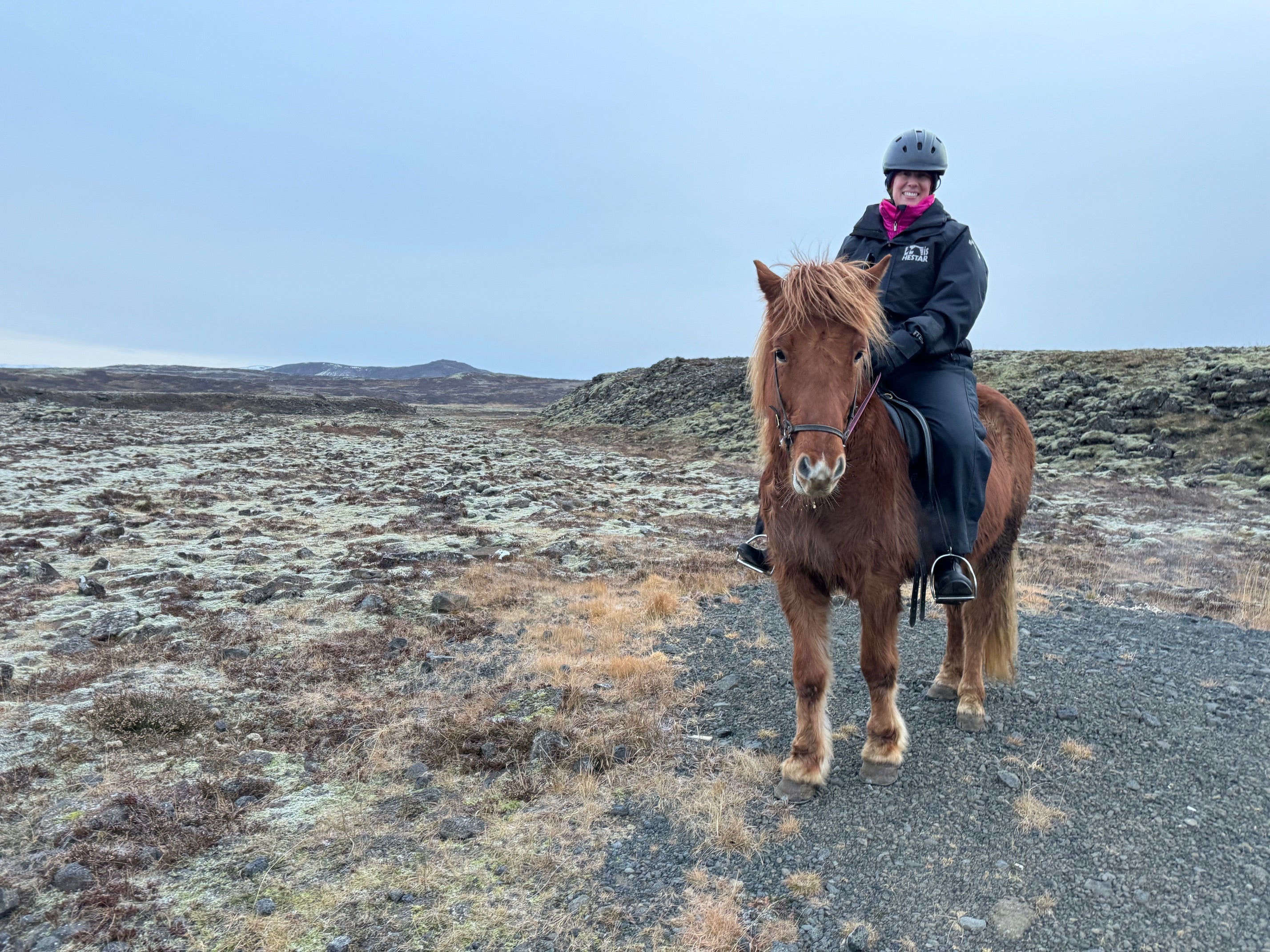
Iceland has spectacular nature and offers scholars an opportunity for unique outdoor experiences, in addition to a vibrant cultural scene and an exciting local cuisine. There is a good public school system, and scholars with children have had positive experiences.
Since the Fulbright Program in Iceland is relatively small, the Commission is able to maintain close ties with scholars during their stay and provide a sense of community among Fulbright scholars and fellows. There are monthly grantee activities sponsored by the Commission, in addition to access to Fulbright alumni events and other social activities.
Please see below two grantee video profile of U.S. scholars who talk about her experiences doing research and teaching in Iceland:
Visit the Fulbright Iceland website for information about current and previous grantees.
Visit our Scholar Directory to view and search all Fulbright alumni. You can also learn more about Fulbright Alumni Ambassadors.
The applicant should be active in the field of study, as relates to deep drilling.